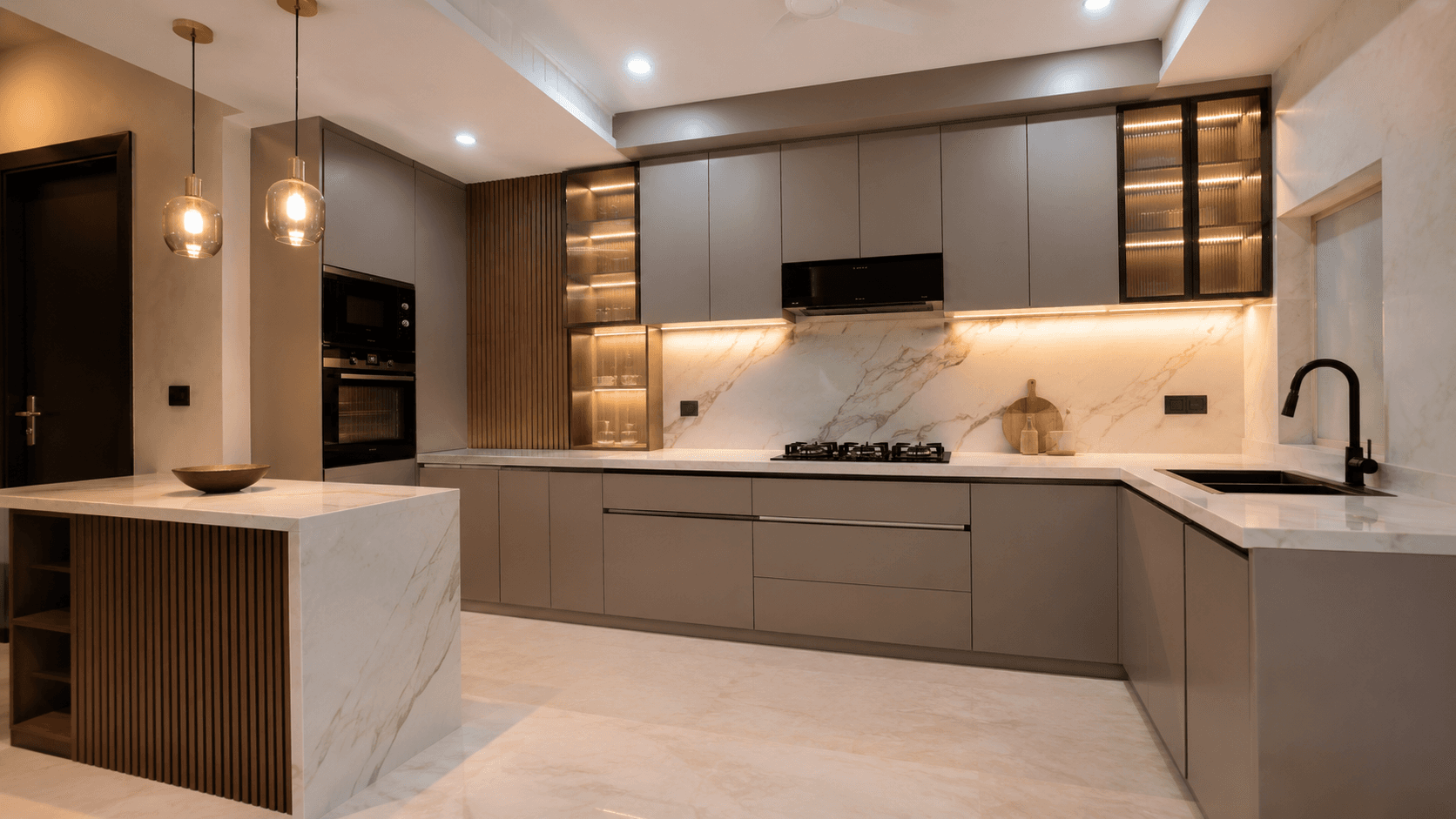
A modular kitchen in Delhi NCR costs approximately ₹1.5–3 Lakh for an entry-level laminate kitchen, ₹3.5–6 Lakh for a mid-range acrylic/PU kitchen, or ₹6 Lakh+ for a premium kitchen in 2026. The kitchen is the single most-used, most-quoted, and most-argued-over room in an Indian home renovation — it's also the room where a bad decision costs you the most, every day, for years.
Choosing the Right Layout for Your Space
Straight (single-wall) layouts work for compact 1BHK/2BHK kitchens under 80 sq. ft. — efficient, low-cost, but limited counter space. L-shaped layouts are the default for most 2BHK/3BHK kitchens in Delhi NCR, giving you a natural work triangle between sink, stove, and fridge. U-shaped and parallel layouts suit larger kitchens (100 sq. ft.+) and are worth the extra cost if you cook daily — the extra counter and storage genuinely change how the kitchen functions, not just how it looks.
Island layouts look striking in renders but need at least 120 sq. ft. of clear kitchen area to work in an Indian home — don't force one into a smaller space just because it trended on Pinterest.
Finish Options, Honestly Compared
Our advice: don't choose finish from a screen. Ask for physical samples under your kitchen's actual lighting — laminate and PU can look nearly identical in a render and completely different under a warm-white LED strip at 9pm.
| Finish | Look | Durability | Relative Price |
|---|---|---|---|
| Laminate | Wide colour range | Can show seams over time | Budget-friendly default |
| Acrylic | High-gloss, premium | Resists stains well | Moderate premium over laminate |
| PU (Polyurethane) | Richest colour depth | Most durable, scratch-resistant | Costs the most |
| Membrane | Matte, contemporary | Good mid-range durability | Mid-range price point |
Hardware Is Where 'Modular' Actually Earns Its Name
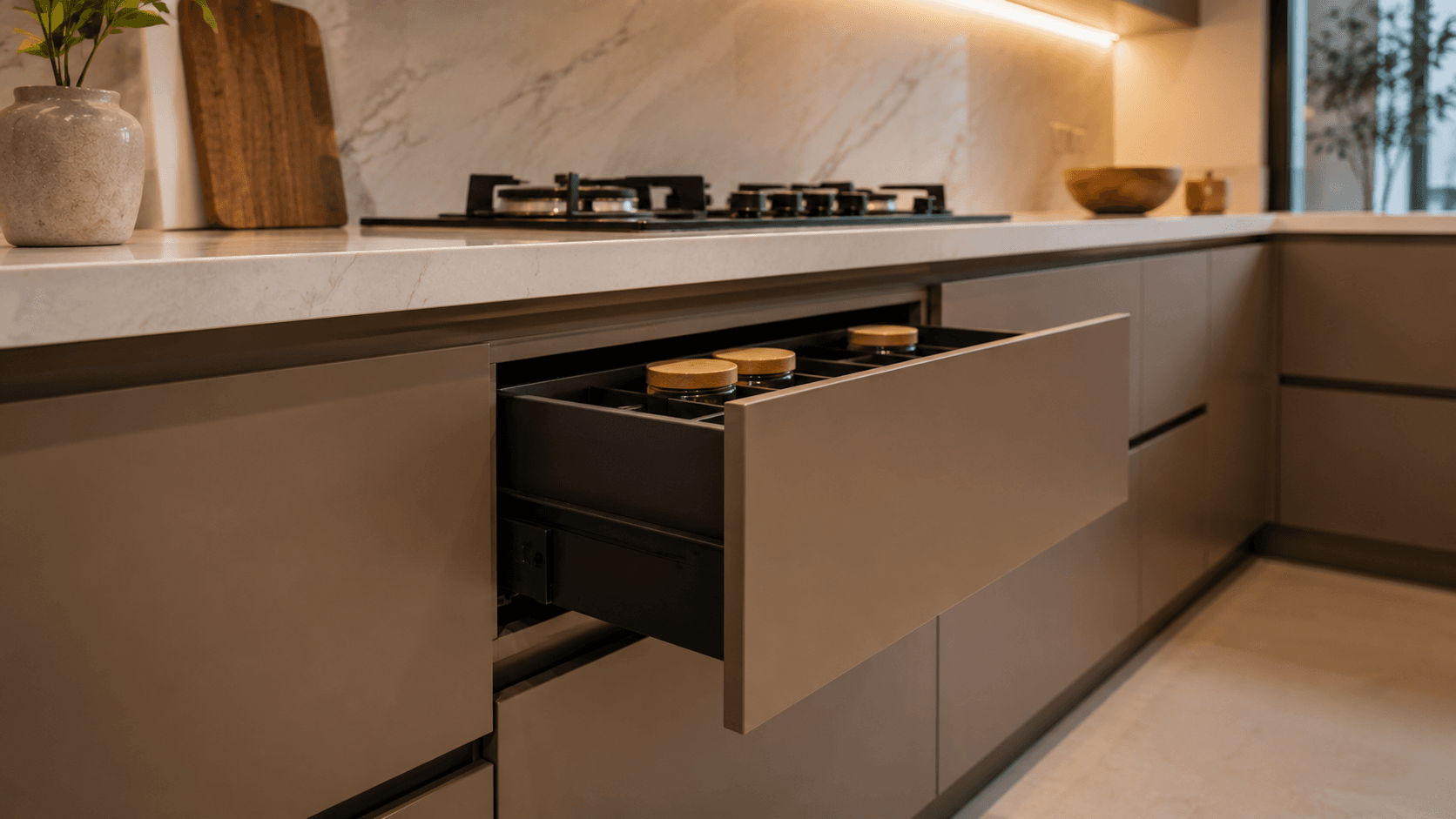
The difference between a kitchen that still closes smoothly in year five and one that's sagging by year two is almost entirely the hardware — hinges, channels, and lift-ups. Branded hardware (Hettich, Hafele, Ebco) is tested for tens of thousands of open-close cycles and comes with manufacturer warranties; unbranded hardware often isn't. This is the one place in a modular kitchen budget we'd never recommend cutting corners.
Realistic 2026 Cost Breakdown
Our Modular Interiors service starts at approximately ₹1 Lakh+ for smaller kitchens and wardrobe combinations, scaling with size, finish, and hardware — every quote is itemised so you know exactly what you're paying for before production starts.
| Tier | Spec | Price |
|---|---|---|
| Entry-level | Laminate finish, standard hardware, straight or L-shaped, up to 10 ft. | ₹1.5–3 Lakh |
| Mid-range | Acrylic/PU finish, branded soft-close hardware, L-shaped or U-shaped | ₹3.5–6 Lakh |
| Premium | Full PU or veneer, premium hardware, island or large U-shaped, integrated appliances | ₹6 Lakh+ |
Three Questions to Ask Before You Sign
Is the measurement laser-taken on-site, or estimated from a floor plan? Catalogue-based estimates almost always mean gaps and filler strips at installation. Which specific hardware brand and hinge cycle-rating is quoted — not just 'branded hardware'? And is installation done by the company's own trained team, or outsourced to a local fitter? All three answers matter more than the headline price.